

AI has never been more powerful, yet the hardest enterprise problems remain out of reach. Every organization now has access to remarkable AI components: large language models, ML frameworks, and agent toolkits. But components are not systems. When a high-stakes business question lands, the answer is never one off-the-shelf model or one generic agent. It is dozens of custom models and agents, each requiring accuracy, auditability, and continuous improvement. Today it takes months to build just a single production-ready custom model, and maintenance never ends. Overall, AI is in its flat-files era: extraordinary raw ingredients, no system to compose and manage them at scale.
This talk introduces the concept of self-designing AI: an infrastructure that transforms intelligence from a scarce, artisanal product into a managed, compounding organizational asset. The core insight is that a small set of computational primitives, composed through automated search, can generate the right system for each specific context. Because that context is always changing, these systems must be self-designing from the ground up: able to automatically compose, adapt, and evolve their own agents and models as conditions shift. We will present the underlying principles and recent results, including LegoAI, which automatically designs large language model training algorithms based on available resources and model characteristics. LegoAI was productized as TorchTitan, now shipping as part of PyTorch.
Stratos Idreos is the Gordon McKay Professor of Computer Science at Harvard University's John A. Paulson School of Engineering and Applied Sciences and Faculty Co-Director of the Harvard Data Science Initiative. He leads DASlab, the Harvard Data and AI Systems Laboratory. His research pursues a fundamental shift in how we build systems: self-designing data and AI systems. By discovering the alphabets and grammars that govern system architectures, his work enables machines, not humans, to invent entirely new systems tailored to specific workloads, hardware, and constraints.
This vision has produced foundational results including the Data Calculator for automatic data structure design, Cosine and Limousine for self-designing key-value stores, the Image Calculator which accelerates Image AI applications via tailored storage, and LegoAI which has been productized into PyTorch's TorchTitan for large model training. His earlier work on Database Cracking introduced automated adaptive indexing based on the workload. Before Harvard, Stratos was a researcher at CWI Amsterdam and held visiting positions at EPFL, Microsoft Research, IBM Almaden, University of Trento, and the National University of Singapore. He earned his PhD from the University of Amsterdam.
Stratos is a recipient of the Sloan Research Fellowship, the National Science Foundation CAREER Award, and the Department of Energy Early Career Award. His work has received the ACM SIGMOD Jim Gray Doctoral Dissertation Award, the ACM SIGMOD Test-of-Time Award, the CIDR Test-of-Time Award, and the ERCIM Cor Baayen Award as the most promising young researcher in computer science across Europe. He co-chaired ACM SIGMOD 2021 and IEEE ICDE 2022 and co-founded the ACM/IMS Journal of Data Science.
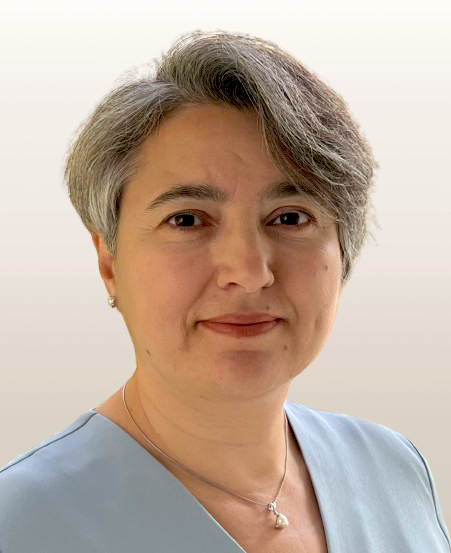
Observability is the ability to understand and control the behavior of large-scale software systems using run-time telemetry. Managing observability data involves handling massive volumes of heterogeneous time series while operating under tight resource constraints. Troubleshooting the observed system requires efficient exploration of this data through interactive queries with time-oriented operations. Advances in AI have enabled more sophisticated data analysis techniques such as anomaly detection and explanation. This talk presents examples from our recent research in data management for modern observability in response to these challenges and opportunities.
Nesime Tatbul is a Senior Staff Research Scientist at Intel. For over a decade now, she has been based at MIT, overseeing Intel's university research programs on data systems and artificial intelligence. Previously, she received a Ph.D. from Brown University and held a faculty position at ETH Zurich. Her research contributions in data stream systems, time series analytics, and learned data management have been widely cited and recognized by awards. Nesime is an ACM Distinguished Member, an IEEE Senior Member, and a Trustee Emeritus of the VLDB Endowment.